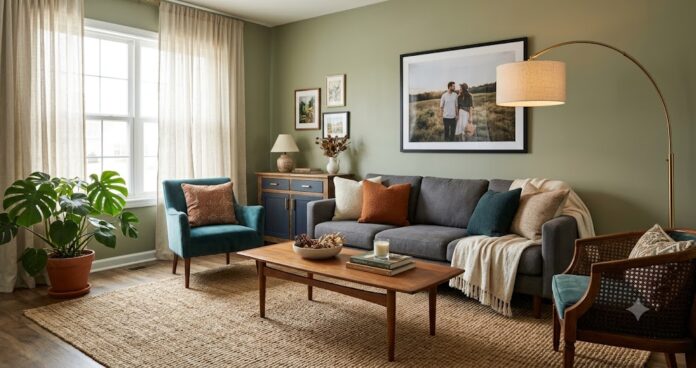
The best budget friendly living room decorating ideas focus on high-impact visual anchors: tactical paint placement, thrifted furniture restoration, strategic lighting placement, and textile layering. By modifying layout geometry and texture rather than purchasing retail suites, you can design an expensive-looking space on a minimal budget.
Key Takeaways for High-End, Low-Cost Design
- The Focal Point Pivot: Restructure your entire room layout around a single, zero-cost focal point like a window view or a fireplace instead of an expensive entertainment center.
- The “Thirds” Lighting System: Swap a single overhead light fixture for three well-placed floor and table lamps in dark corners to give the space a warm, high-end hotel feel.
- Textile Mixing Over Replacement: Do not buy a brand-new couch. Introduce heavy-weave linen throw pillows and affordable textured cotton blankets to instantly upgrade worn seating surfaces.
- Scale Up the Area Rug: A tiny rug cuts a room in half visually. Purchasing a larger, flat-weave jute rug grounds your layout and creates an expansive, designer look for cheap.
1. The High-End Illusion: Designing for Maximum Visual Impact
Most styling guides covering budget friendly living room decorating ideas give you the same advice: go out and buy cheap, flimsy plastic storage boxes or tiny decorative trinkets. When deploying that fast-decor approach, homeowners usually hit a bottleneck: accumulating small accessories creates intense visual clutter, which makes a room feel uncoordinated and cheap.
To achieve a genuinely sophisticated space, you must focus on scale, architectural lines, and light distribution. True budget decorating relies on maximizing your existing infrastructure and strategically allocating your funds toward large, high-density style elements.
High-Impact Enhancements vs. Budget-Wasting Pitfalls
| Living Room Area | The Costly Mistake | The Budget-Friendly Solution | Visual Impact Value |
| Wall Treatment | Wallpapering an entire room with intricate patterns. | Executing a painted feature wall or high-contrast trim. | Instantly anchors the room layout |
| Furniture Layout | Purchasing a matching 3-piece showroom sofa set. | Mixing an existing couch with mismatched thrifted accent chairs. | Creates a custom, curated feel |
| Window Setup | Hanging short, dark curtains directly above the glass pane. | Mounting wide, neutral linen panels flush with the ceiling line. | Expands vertical room perception |
| Art Display | Buying dozens of small, poorly framed commercial prints. | Framing a single oversized personal photograph or canvas. | Provides a clean luxury aesthetic |
Pro Tip: In practice, empty space is completely free luxury. Leaving one wall entirely blank or keeping a corner clear gives the eye a place to rest, which instantly makes any room feel like a high-end architectural space.
2. Phase 1: Architectural Paint Hacks and Color Blocking
Paint is the absolute lowest-cost tool for transforming a room’s atmosphere. Instead of simply coating four walls in a flat off-white shade, use color strategically to alter how the eye perceives the architecture of your living room.
[Standard Boxy Room] ➔ [Paint Trim & Ceiling a Single Warm Hue] ➔ [Eliminate Harsh Contrast ines]
The Monochromatic Trim Strategy
Paint your walls, baseboards, door frames, and crown molding the exact same color using different paint gloss levels (flat for walls, semi-gloss for trim). When deploying this, you eliminate the harsh white framing lines that truncate small or average-sized living rooms. This technique makes your walls look taller and hides uneven old drywall surfaces.
High-Contrast Architectural Focal Points
If your living room lacks an interesting architectural feature, create one with paint. Coat the narrow far wall of a long room in a deep charcoal, forest green, or warm terracotta tone. This draws the eye deep into the seating zone, forming an intentional backdrop for your television or gallery arrangement without requiring a costly remodel.
3. Phase 2: Upcycling, Thrift Arbitrage, and Furniture Placement
You do not need brand-new furniture pieces to establish a modern aesthetic. Showroom sets feel generic and lose their value the second they enter your home. Instead, look for solid wood structural pieces that have minor surface scratches or dated paint coats.
1.Map Fluid Foot-Traffic Lanes:Phase 1.
Measure your room entries and pathways before hunting for items. Ensure you leave at least 30 inches of space between major items for easy movement.
2.Source Heavy Solid-Wood Secondary Furniture:Phase 2.
Hunt on local online marketplaces or thrift shops for solid oak, walnut, or pine coffee tables and sideboards. Avoid compressed particleboard alternatives. [Internal Link: A Beginner’s Guide to Restoring Thrifted Wood Furniture]
3.Apply Modern Hardware and Matte Coatings:Phase 3.
Sand down your thrifted find and apply a clear matte protective oil or a sleek coat of black chalk paint. Swap out old, tarnished drawer knobs for modern brushed brass pulls.
4. Phase 3: Textile Layering and Multi-Dimensional Textures
The secret behind spaces styled by professional interior designers is texture. A room filled entirely with smooth, flat fabrics looks clinical and cold. By layering various textiles, you add depth and a cozy warmth to your living room on a minimal budget.
Upgrading a Worn Sofa on a Budget
If buying a new couch isn’t an option, do not settle for an ill-fitting, wrinkled elastic slipcover. Instead, buy a large, heavyweight linen or cotton canvas drop cloth. Tuck it tightly over the entire sofa frame and cushion seams, securing it with hidden upholstery pins.
Standard Flat-Weave Fabric ──┐
├──> [Rich, High-Luxury Sensory Living Room]
Bouclé, Jute, and Woven Linen ┘
The Curated Accent Pillow Blueprint
Skip cheap, premade decorative pillows filled with polyester batting. Instead, buy affordable cushion covers online and stuff them with plush down or down-alternative inserts that are slightly larger than the cover (e.g., a 20×20 insert inside an 18×18 cover). This minor change gives your seating area a high-end, tailored look.
Expert Insight: A common bottleneck is purchasing mismatching, hyper-bright neon accessories. Stick to a tight palette of three tones: a primary neutral base, a rich secondary wood tone, and a single subtle accent texture like brushed metal or woven wicker.
5. Phase 4: Advanced Lighting Techniques to Hide Design Flaws
Poor, harsh lighting can make even the most expensive furniture look sterile and cheap. Alternatively, strategic, warm lighting can completely hide dated flooring or worn wall textures by drawing focus precisely where you want it.
Implementing the Three-Point Illuminating Layer
Never rely on a central flush-mount ceiling light to illuminate your living area in the evening. Instead, distribute three separate light sources around the perimeter of the room at different heights: a tall arched floor lamp over the main sofa corner, a warm table lamp on a side console, and a subtle uplight hidden behind a large indoor floor plant.
Budget High-End Electrical Swaps
- Plug-In Wall Sconces: Mount battery-powered or plug-in fabric wall sconces on either side of your main seating arrangement without paying for expensive hidden wall rewiring.
- Warm Temperature LED Bulbs: Swap out cool blue-white bulbs for warm-white options (2700K). This subtle change instantly softens shadows and makes fabrics look richer.
6. Frequently Asked Questions (FAQ)
How can I make my living room look expensive on a small budget?
To make a living room look high-end for cheap, declutter your surfaces, use a single oversized piece of statement art instead of multiple small frames, scale up your area rug, and swap out matching furniture sets for a curated mix of thrifted solid-wood pieces.
What is the cheapest way to refresh dark living room walls?
The most cost-effective solution is to use high-hide matte latex paint in a warm ivory, light beige, or soft mist-gray tone. Applying a bright color immediately expands natural light distribution across the room without requiring a change in layout.
How do I decorate a living room without buying new furniture?
You can completely transform your space for free by rearranging your layout away from the walls, deep-cleaning your fabrics, styling books by color or size on shelves, and bringing in leafy green clippings from your outdoor garden into simple glass jars.
What size rug should I buy for a budget-friendly living room?
Always choose a large rug—ideally an 8×10 or 9×12 foot option for standard living spaces. If large woolen rugs are too expensive, buy an affordable, oversized natural jute or sisal rug to ground the space beautifully. [External Link: Bob Vila’s Living Room Rug Placement Rules]
How can I hide ugly rental apartment flooring for cheap?
You can conceal damaged or dated rental floors by layering multiple large, inexpensive flat-weave cotton rugs or a large natural fiber jute mat directly over problem areas, focusing your coverage on high-traffic seating sections.
7. Transform Your Living Space Today
A beautiful, functional home isn’t built on a high-end furniture store credit line—it is built on smart execution. Analyzing design blogs for months without taking action won’t create a welcoming space for your family—getting started will. Pick one corner of your living room to optimize this weekend, clear out the clutter, update a piece with a fresh coat of paint, and watch your entire space come alive.

