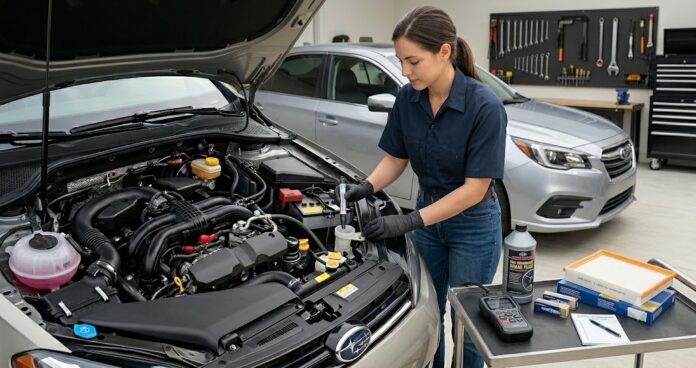
Mastering essential car maintenance tips for beginners saves thousands in mechanics’ labor fees while keeping your vehicle safely on the road. Rather than waiting for a catastrophic mechanical failure, proactive drivers use a structured inspection routine—covering engine oil dipstick checks, tire pressure balancing, and brake pad wear audits—to detect system anomalies early. This comprehensive guide details step-by-step fluid management frameworks, tire safety checks, and basic emergency diagnostic steps to help you confidently take control of your vehicle’s health.
The Beginner’s Maintenance Mindset
- The Lifeblood Factor: Checking engine oil monthly protects vital internal moving components from fatal friction damage.
- The Contact Patch: Keeping tires filled to the exact door-jamb PSI prevents uneven tread wear and improves your fuel economy by up to 3%.
- The Early Warning System: Ignoring a “Check Engine” dashboard light can transform a simple loose gas cap into an expensive catalytic converter replacement.
1. Under the Hood: Managing the Fluids That Keep Your Car Alive
When deploying a basic vehicle inspection framework, your engine bay is the most critical area to monitor. Internal combustion engines and modern transmissions rely on sealed fluid circuits to cool moving parts, clear metal shavings, and transfer hydraulic energy.
How to Check and Top Up Your Engine Oil
Engine oil breaks down over time due to heat, losing its protective viscosity. To check your oil accurately, park on a flat surface, turn off the engine, and wait ten minutes for the oil to drain completely back into the pan.
1.Locate and Clean the Dipstick:Step 1.
Pull out the bright yellow or orange loop handle under your hood. Wipe the long metal rod completely clean with a shop rag to remove the splashed residue.
2.Reinsert and Check the Level:Step 2.
Push the clean dipstick completely back down into its guide tube, leave it for one second, and draw it out smoothly a second time.
3.Read the Fluid Markers:Step 3.
Examine the tip of the metal rod. The oil level must sit firmly between the “MIN” and “MAX” lines (or two etched crosshatch dots). If the oil line is below the minimum marker, add a quarter-quart of the exact oil viscosity listed in your owner’s manual.
The Essential Fluid Inspection Matrix
Beyond your motor oil, four secondary fluid reservoirs require a quick monthly visual check. Most modern vehicles feature translucent plastic tanks under the hood, allowing you to quickly monitor fluid levels without opening the caps.
| Fluid System | Visual Location / Reservoir Type | Ideal Condition & Color | A Common Bottleneck |
| Engine Coolant | Translucent plastic overflow tank near the radiator | Bright pink, green, or blue translucent liquid | Opening a hot cap can release pressurized, scalding steam. |
| Brake Fluid | Small clear reservoir mounted on the driver-side firewall | Clear to light amber; never dark brown or cloudy | Low levels usually mean your brake pads are significantly worn down. |
| Power Steering | Clear tank with a small dipstick cap near the front belt drive | Clear red or amber hydraulic fluid | Grinding noises when turning the wheel indicate low fluid levels. |
| Windshield Washer | Large blue or white cap with a windshield wiper icon | Bright blue or purple cleaning solution | Using pure water can cause the pump lines to freeze in cold weather. |
Pro Tip: When checking your car’s fluids, keep a simple vehicle logbook in your glove compartment. Tracking dates and mileages for fluid top-ups makes it easy to spot hidden slow leaks before they cause a breakdown on the road.
2. Tire Care 101: Maximizing Safety and Tread Longevity
Your tires are the only components of your car that touch the road surface. Running on underinflated or balding tires compromises handling, lengthens stopping distances, and increases your fuel consumption.
Checking Air Pressure the Right Way
Do not rely on your eyes to check tire inflation; an underinflated tire can look completely normal from the outside. Use a dedicated pocket tire pressure gauge once a month when the tires are “cold” (meaning the car has been parked for at least three hours).
Locate the tire specification sticker inside the driver’s door jamb to find the exact recommended PSI (Pounds per Square Inch) for your car. Avoid matching the pressure to the maximum number stamped on the tire sidewall itself, as that rating indicates the maximum inflation the tire structure can hold, not what your specific vehicle needs for optimal handling.
The Quick Penny Test for Tread Depth
To quickly check if your tire treads are deep enough to safely channel water away on wet roads, use a standard coin.
Insert a coin upside down into the central tire tread grooves. If the outer border of the coin is completely visible, your tread depth has worn down below safe limits. This means your tires require immediate replacement to prevent dangerous hydroplaning in wet weather.
3. The Stopping System: Auditing Brake Pads and Rotors
Your braking system is your car’s absolute most important safety feature. In practice, brake pads wear down gradually by design, using sacrificial friction material to slow down the heavy steel brake discs.
Recognizing Early Warning Signals
You can easily catch brake wear early using your ears and feet:
- High-Pitch Squealing: Brake manufacturers include a tiny metal tab called a wear indicator that scrapes against the rotor when the friction pad drops below 2 millimeters, warning you that it’s time for a replacement.
- Grinding or Scraping Sounds: This means the pad material is completely gone, causing metal-to-metal contact that ruins your brake discs and dramatically cuts your stopping power.
- Vibrating Brake Pedal: If you feel a distinct pulsing under your foot while braking, your steel brake rotors are likely warped from heat, requiring professional resurfacing or replacement.
4. Keeping the Lights On: Engine Air Filters and Batteries
An internal combustion engine behaves like a massive pump; it needs clean air to burn fuel efficiently. A clogged engine air filter blocks airflow, forcing the engine to work harder and dragging down your fuel economy.
How to Inspect an Engine Air Filter
Locate the black plastic air box connected to your engine by a wide intake tube. Pop the metal retaining clips, slide out the pleated paper filter element, and hold it up to a bright light source. If the paper filter blocks light or shows built-up layers of dirt, bugs, and debris within the folds, swap it out for a fresh filter to instantly restore your engine’s breathing efficiency.
Basic Car Battery Health Habits
Car batteries have a typical lifespan of 3 to 5 years. Extreme seasonal temperatures accelerate internal chemical breakdown, leading to sudden starting issues.
Open your hood and look closely at the positive and negative lead terminals. If you notice a white, powdery crust building up around the metal clamps, your battery is suffering from acid corrosion. Clean the terminals with a stiff wire brush and a mixture of baking soda and water to ensure a solid electrical connection for your starter motor. [Internal Link: Step-by-Step Battery Jump Starting Guide for Beginners]
5. Frequently Asked Questions (FAQ)
How often should I realistically change my car’s engine oil?
If your vehicle uses standard conventional motor oil, stick to an interval of every 5,000 kilometers or 6 months. For modern cars running premium full-synthetic oils, that safe window expands to anywhere between 10,000 and 15,000 kilometers, though you should always verify the exact numbers inside your vehicle manual.
What should I do if my dashboard “Check Engine” light turns on?
Do not panic, but do not ignore it either. Pull over safely and check if your gas cap is loose, as a loose cap can trigger an emissions warning. If the light remains steady, take your vehicle to an auto parts shop or local garage to read the diagnostic trouble code using an OBD-II scanner tool. If the light begins flashing rapidly, pull over immediately and turn off the engine, as a blinking light indicates a severe engine misfire that can cause catastrophic internal damage.
Why is rotating my tires every few months so important?
Because the front wheels handle all steering forces and support the heavy weight of the engine, front tires wear down significantly faster than rear tires. Rotating your tires from front to back every 8,000 kilometers balances out this uneven wear, extending the lifespan of your tire set by up to 20%.
Can I mix different brands or colors of engine coolant?
No. Different coolant formulations use distinct chemical bases to protect against internal cooling system rust. Mixing green, pink, or orange coolants can create a thick, gel-like sludge that blocks the tiny cooling passages inside your radiator, causing the engine to quickly overheat. [Internal Link: Understanding Engine Coolant Types and Viscosity Ratings]
How often should I replace my windshield wiper blades?
Windshield wiper blades generally last between 6 and 12 months. Ultraviolet sun damage and ozone break down the flexible rubber edge over time, causing wipers to squeak, streak, or leave wide water spots across your windshield, which compromises your visibility during heavy storms.
6. Build Long-Term Mechanical Confidence
Taking care of your car does not require a professional garage setup or years of mechanical training. By spending just fifteen minutes every month checking your fluids, monitoring your tire inflation, and listening for unusual sounds, you can catch minor issues before they turn into major repair bills. Grab your car’s manual, pop the hood this weekend, and build the foundational skills needed to keep your vehicle running smoothly for years to come.

